Intelligent Co-Design: An Interactive LLM Framework for Interior Spatial Design via Multi-Modal Agents

Diagrams and illustrations from the paper.
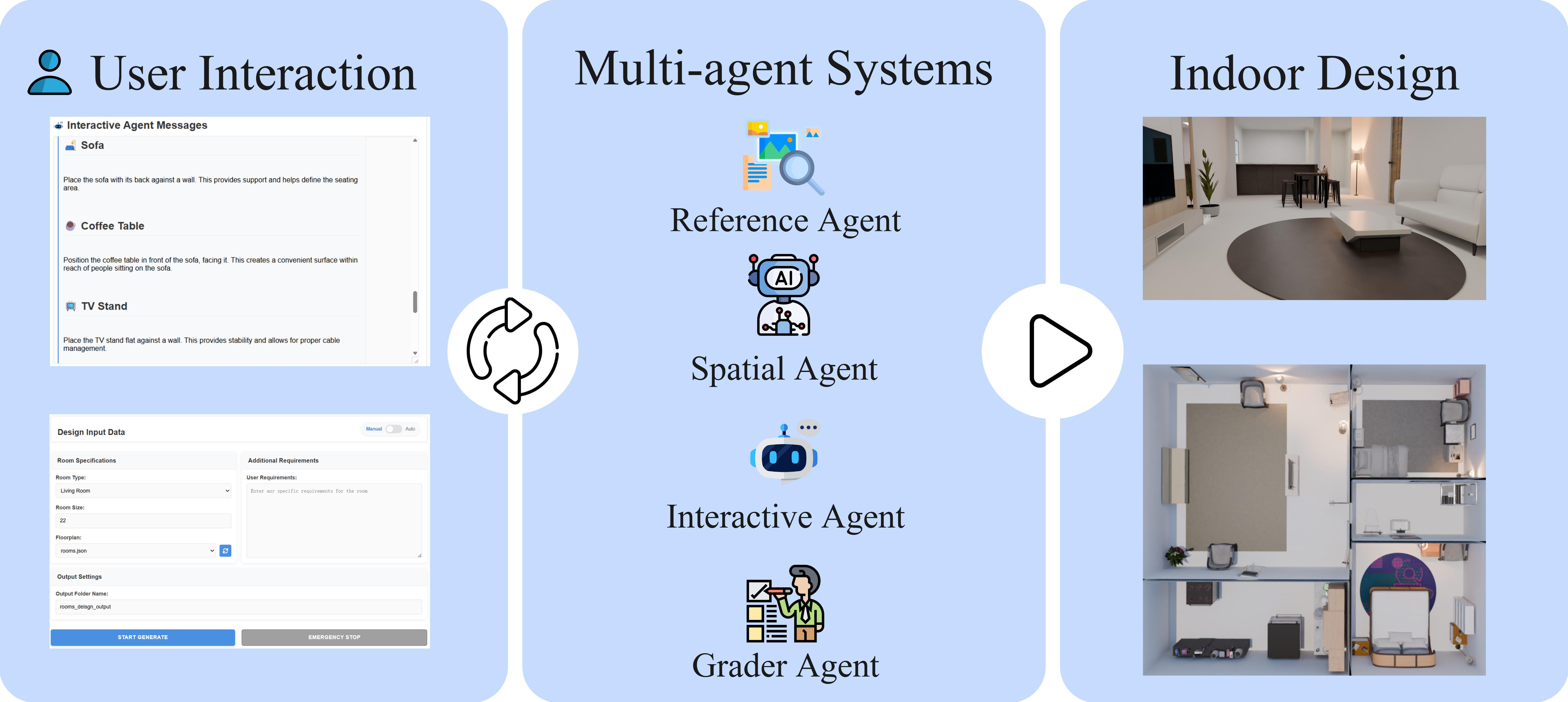
Framework overview
Framework overview: a frontend interface collects input from user-agent dialogue; these inputs flow to a multi-agent system that iteratively refines spatial rules and output the final 3D interior scene.
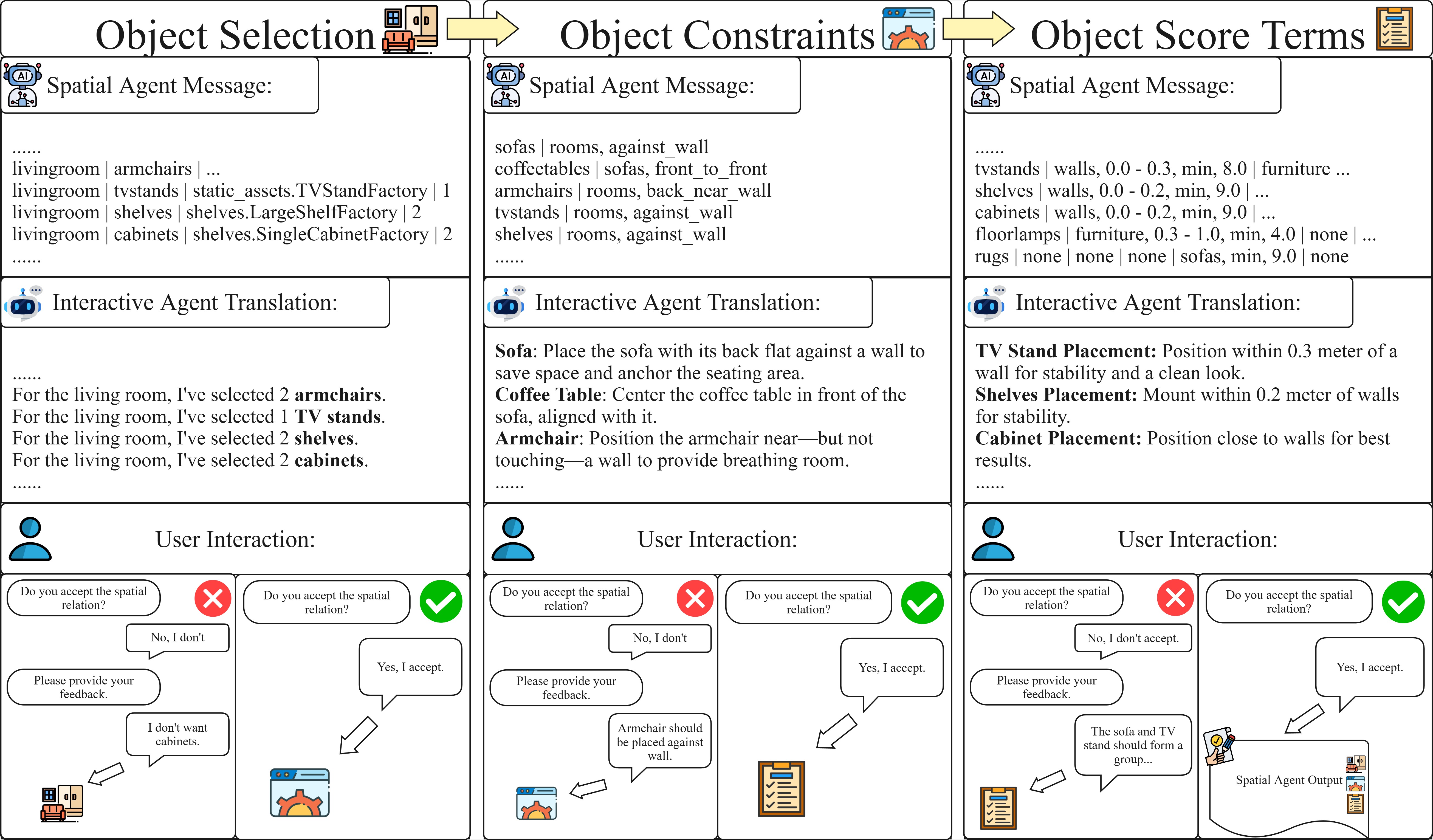
Diagram of user agent interaction across three stages
Diagram of user-agent interaction across three stages: object selection, constraints, and score terms.
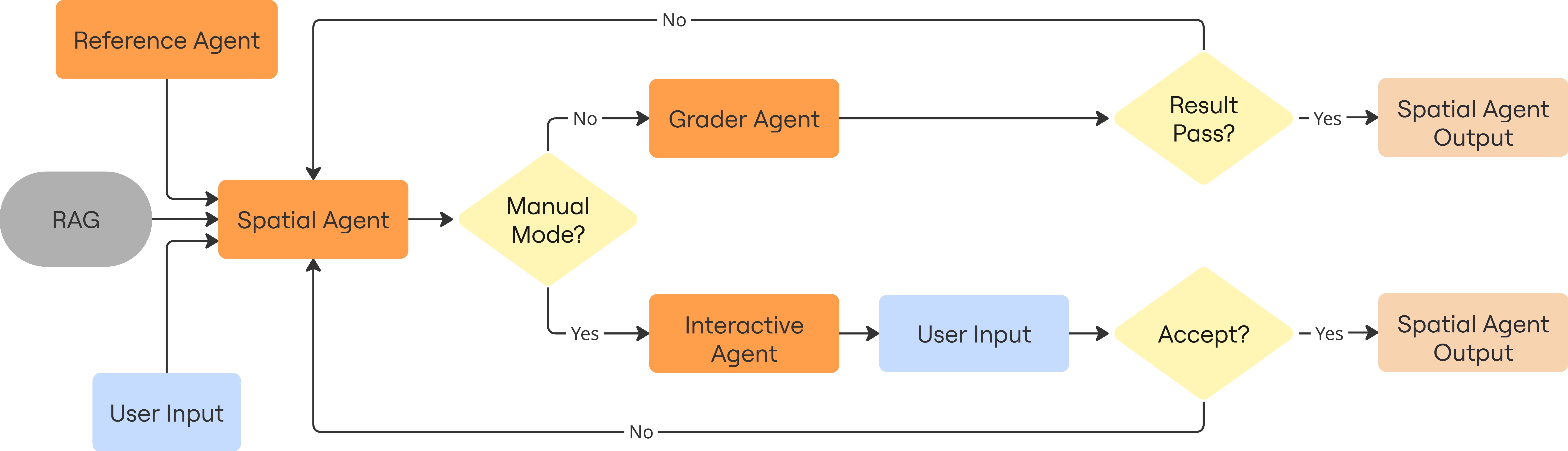
Agent interaction diagram
Agent interaction diagram. User input, RAG context, and the Reference Agent seed the Spatial Agent, which generates initial spatial rules. Refinement follows either manual (user and Interactive Agent) or auto (Grader Agent loop) mode until final rules are accepted.
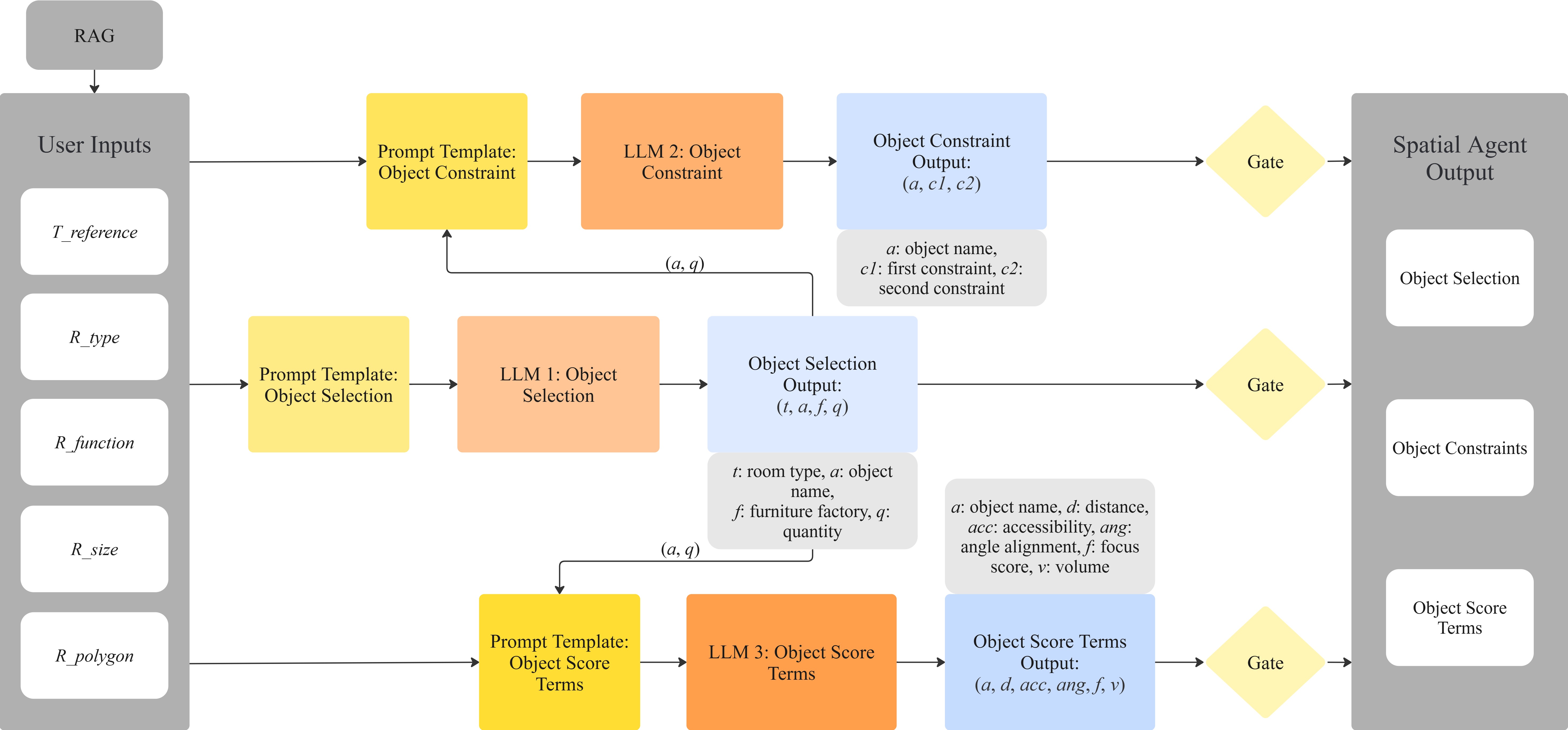
The diagram of the Spatial Agent
The diagram of the Spatial Agent. RAG and user inputs flow through three prompted LLM stages including object selection, object constraint, and object score terms. Each output from the stages passes a gate; the accepted results collectively form the agent's final lists of selected objects, associated spatial constraints and score terms.
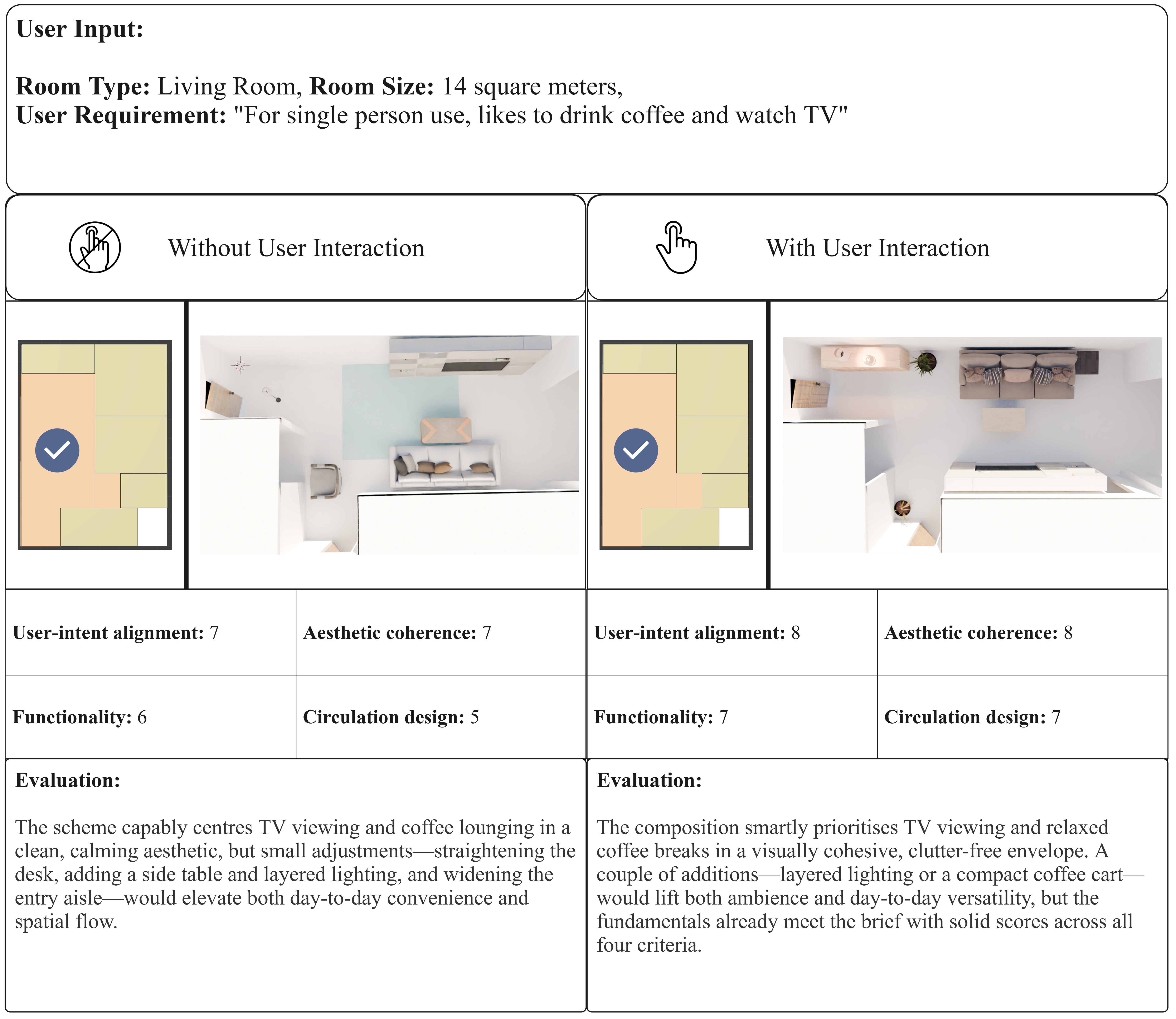
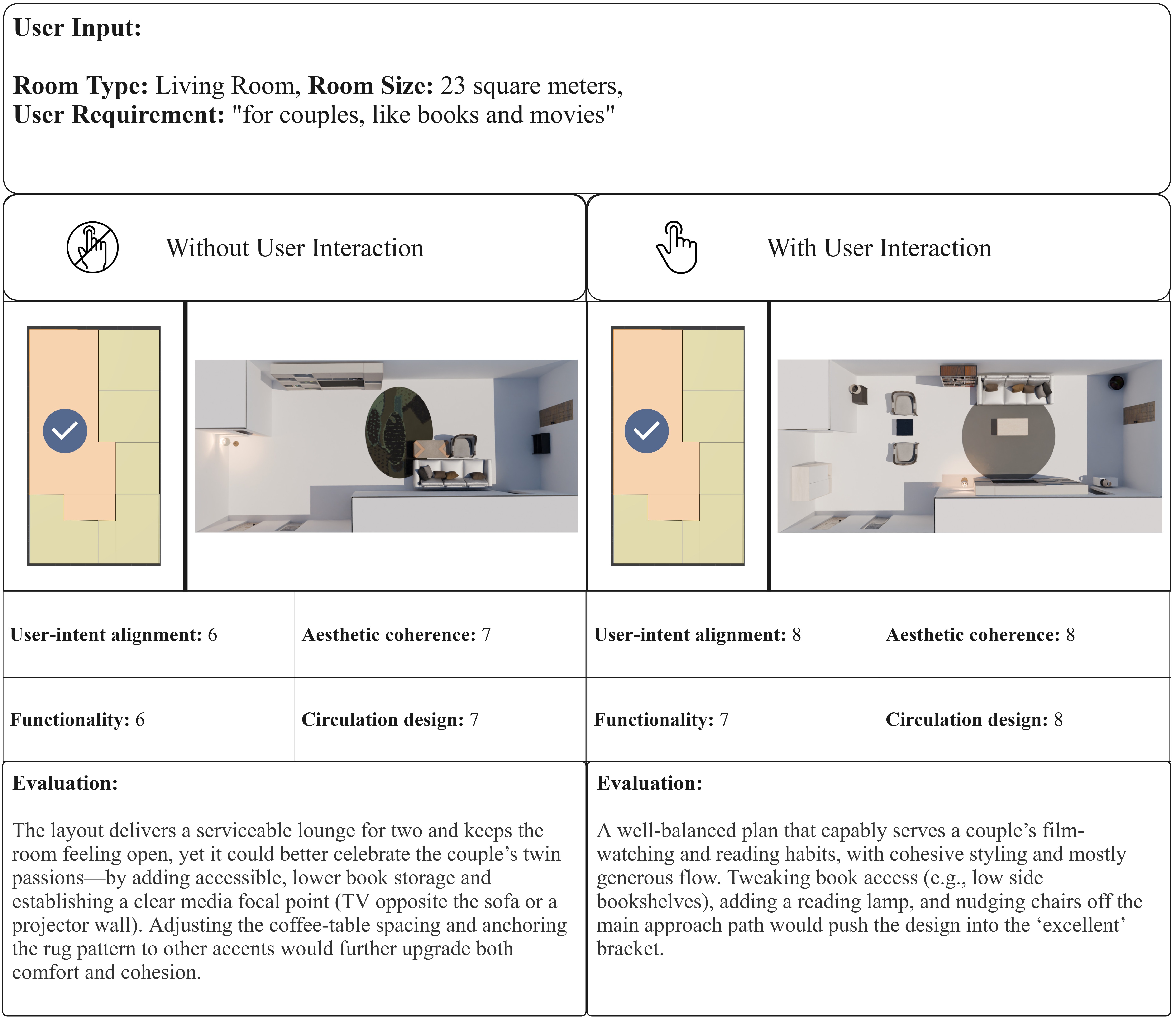
Evaluation diagram for compact living room
Independent LLM evaluation of a compact living room.
Evaluation diagram for spacious living room
Independent LLM evaluation of a spacious living room.
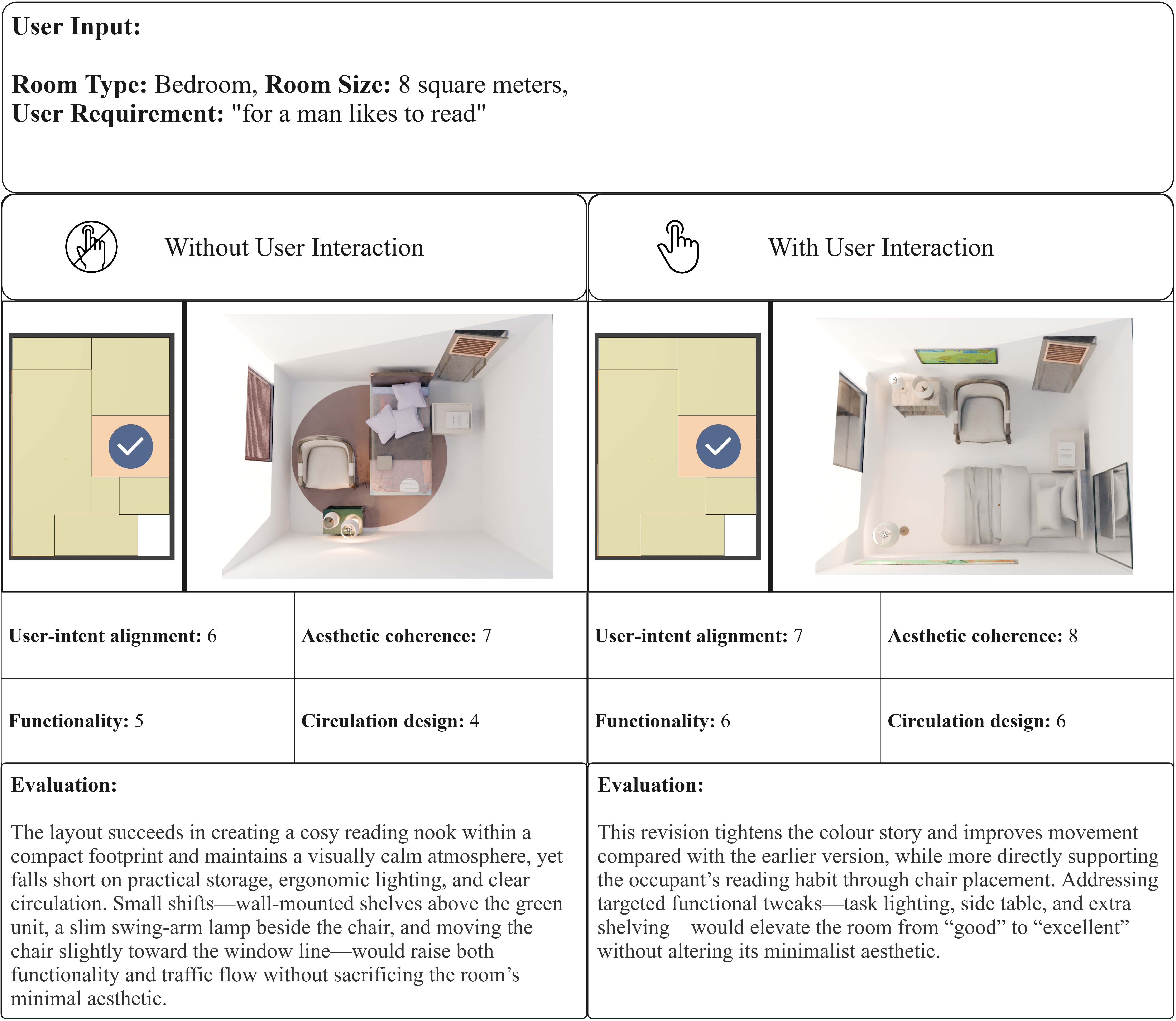
Evaluation diagram for compact bedroom
Independent LLM evaluation of a compact bedroom.
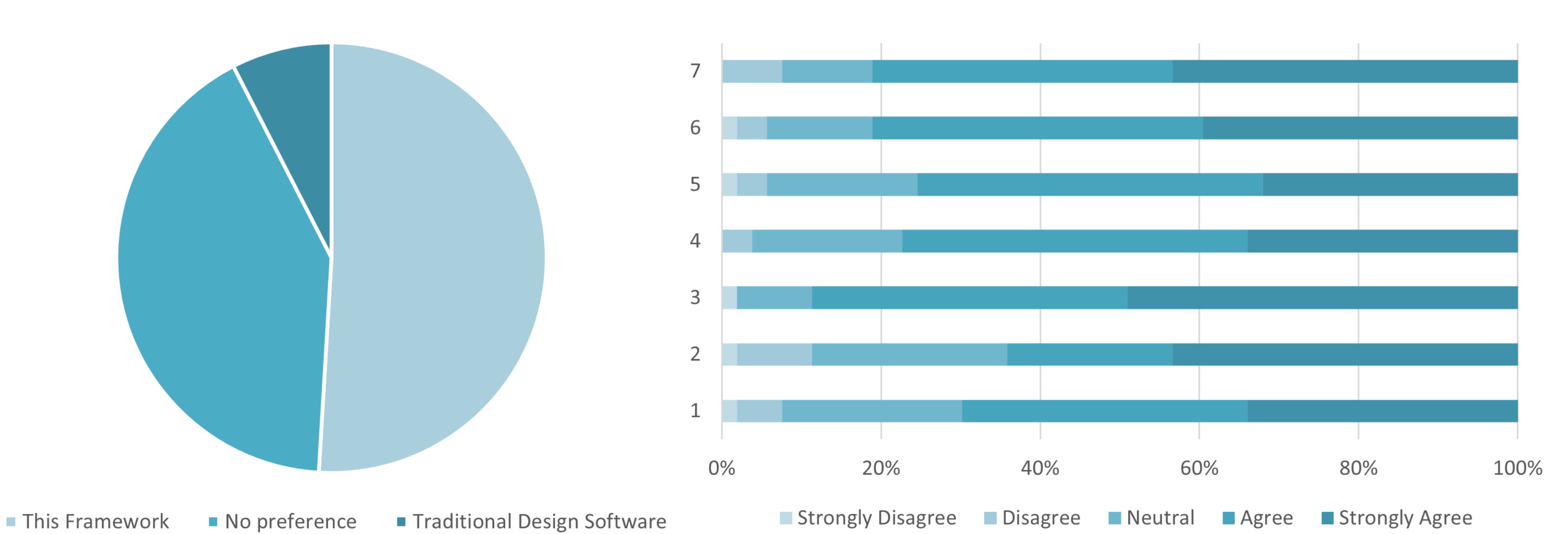
Questionnaire result
Questionnaire result of 53 participants, about overall tool preference (left) and rating of the framework about participatory design elements (right).
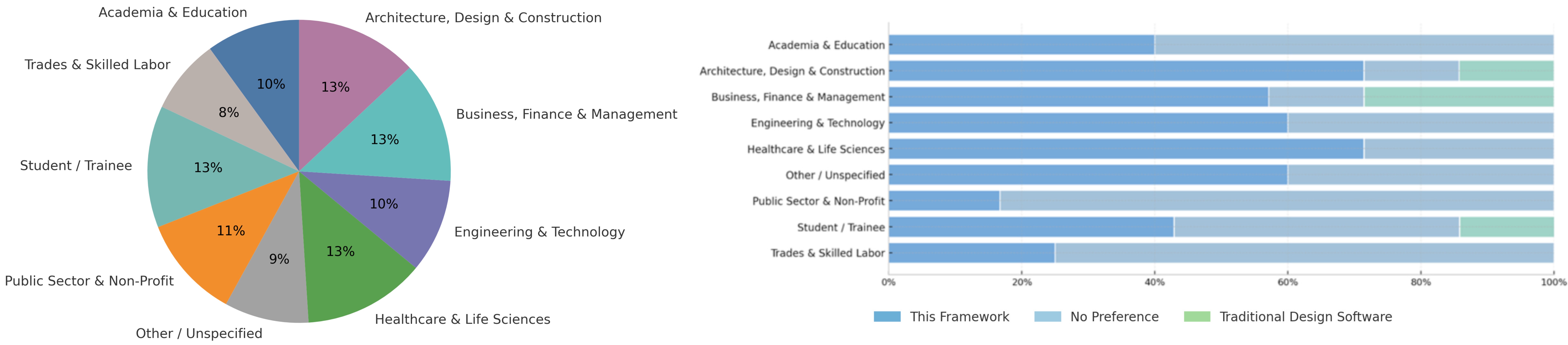
Occupation distribution
Occupation distribution of 53 participants (left) and tool preference distribution by occupation group (right).